Like grass already started to sprout in burned forests, Summerland will thrive again.
Read More

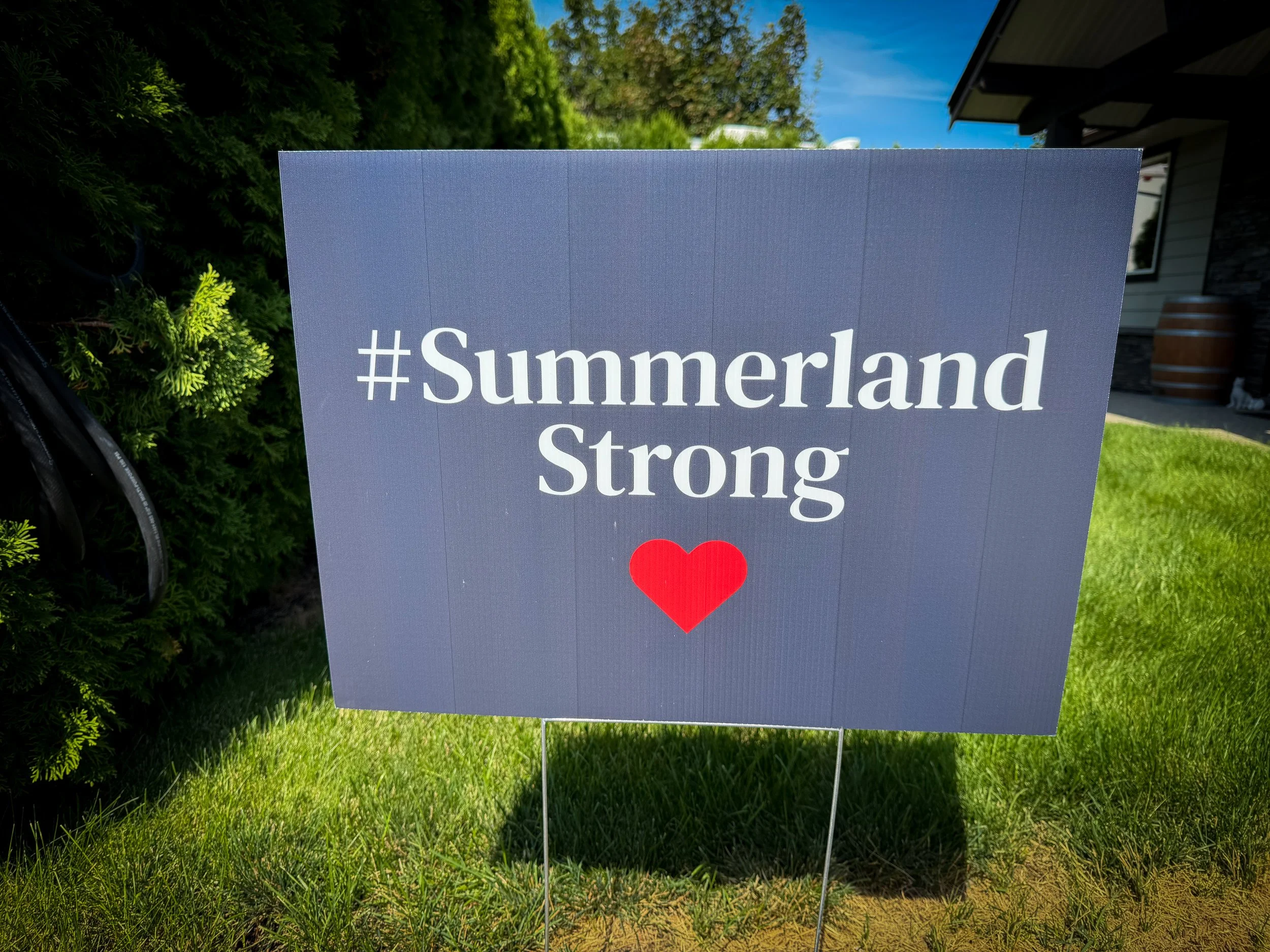
Like grass already started to sprout in burned forests, Summerland will thrive again.
Read More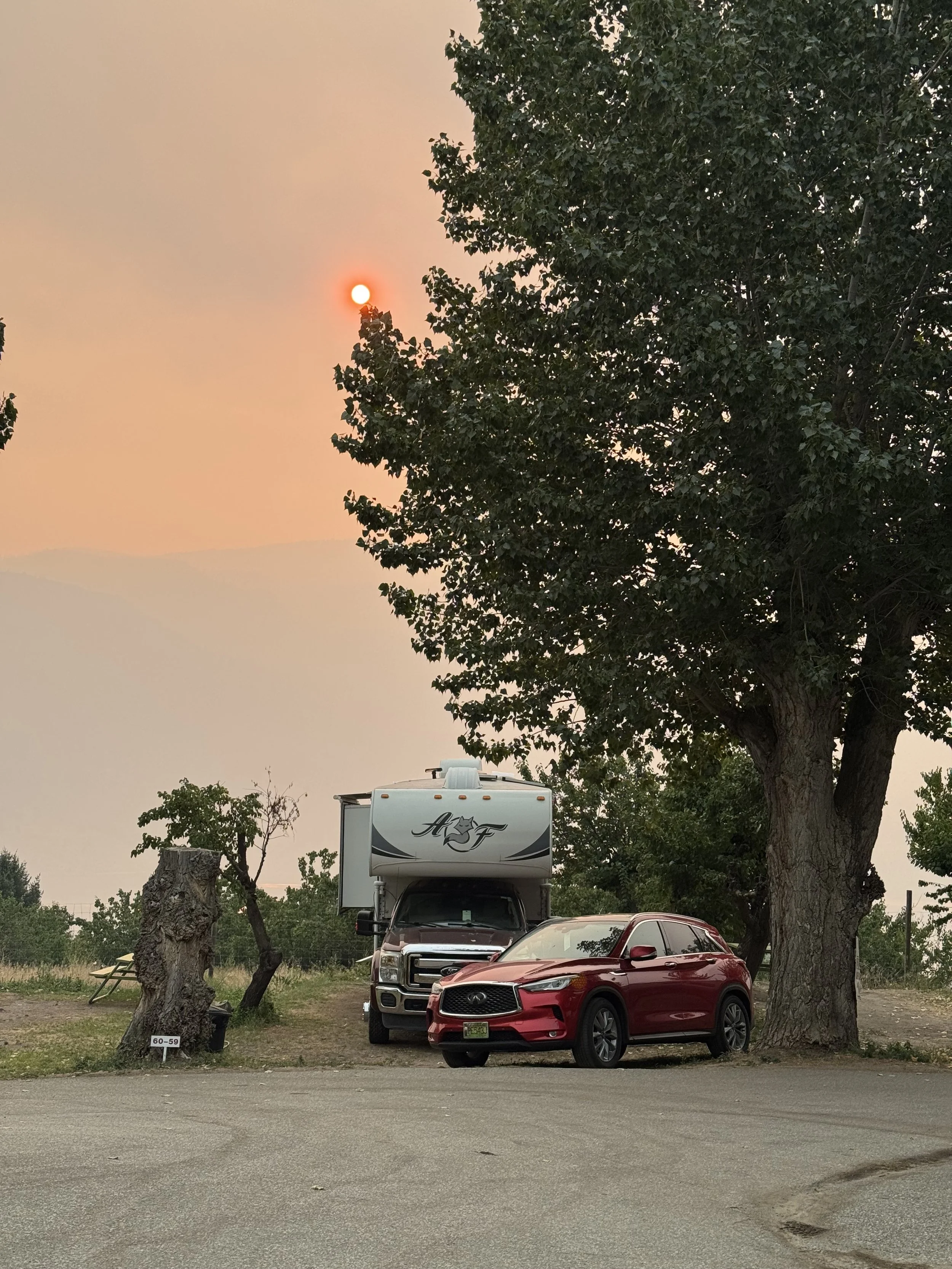
Our home away from home…in the smoke.
After the fire….Relief and Frustration.
Read More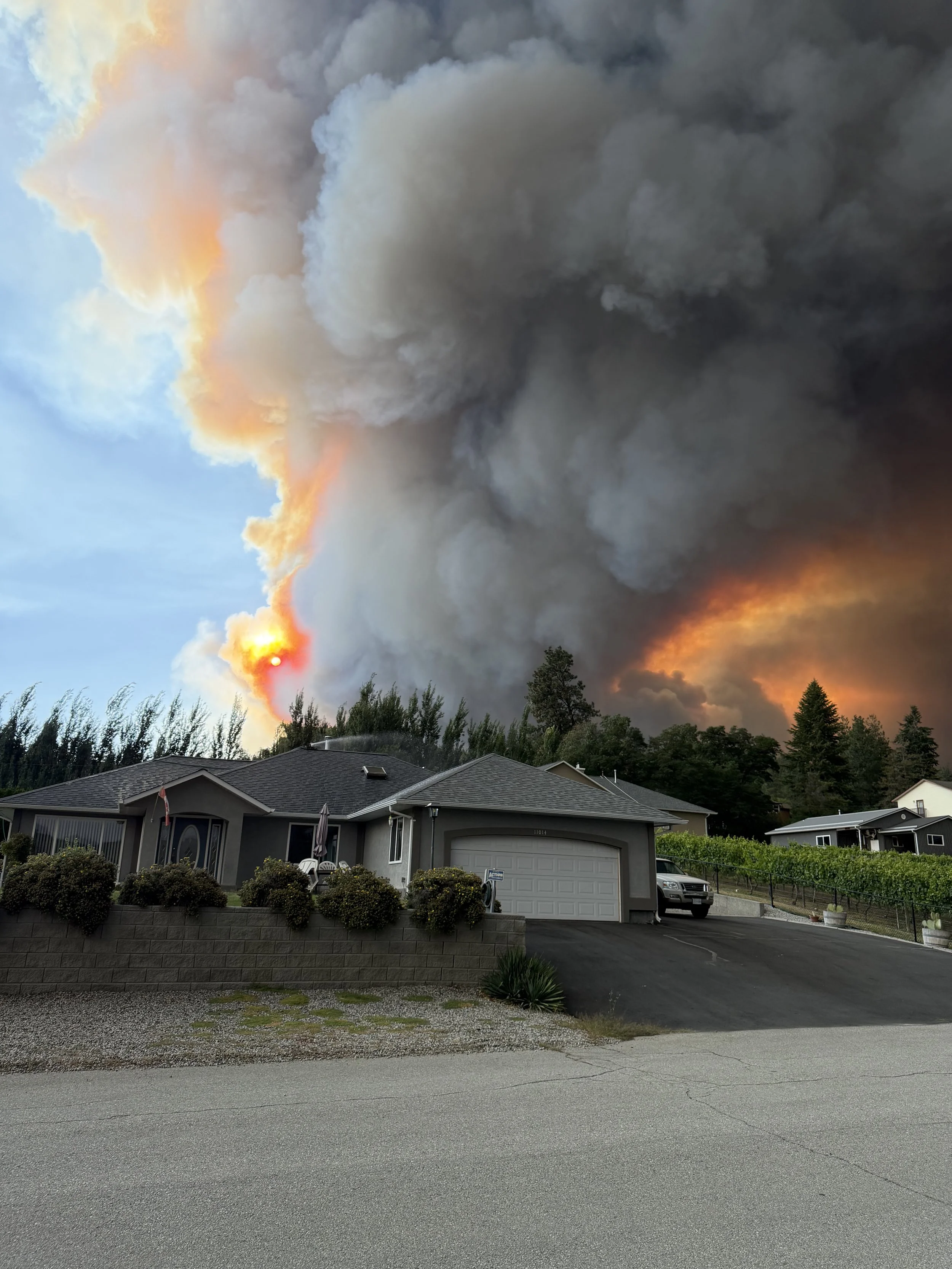
The moment we knew we were in trouble…
Living in the beautiful Okanagan Valley, we are always aware of the potential for wildfires. On Friday, August 7th, this awareness became my nightmare.
Read More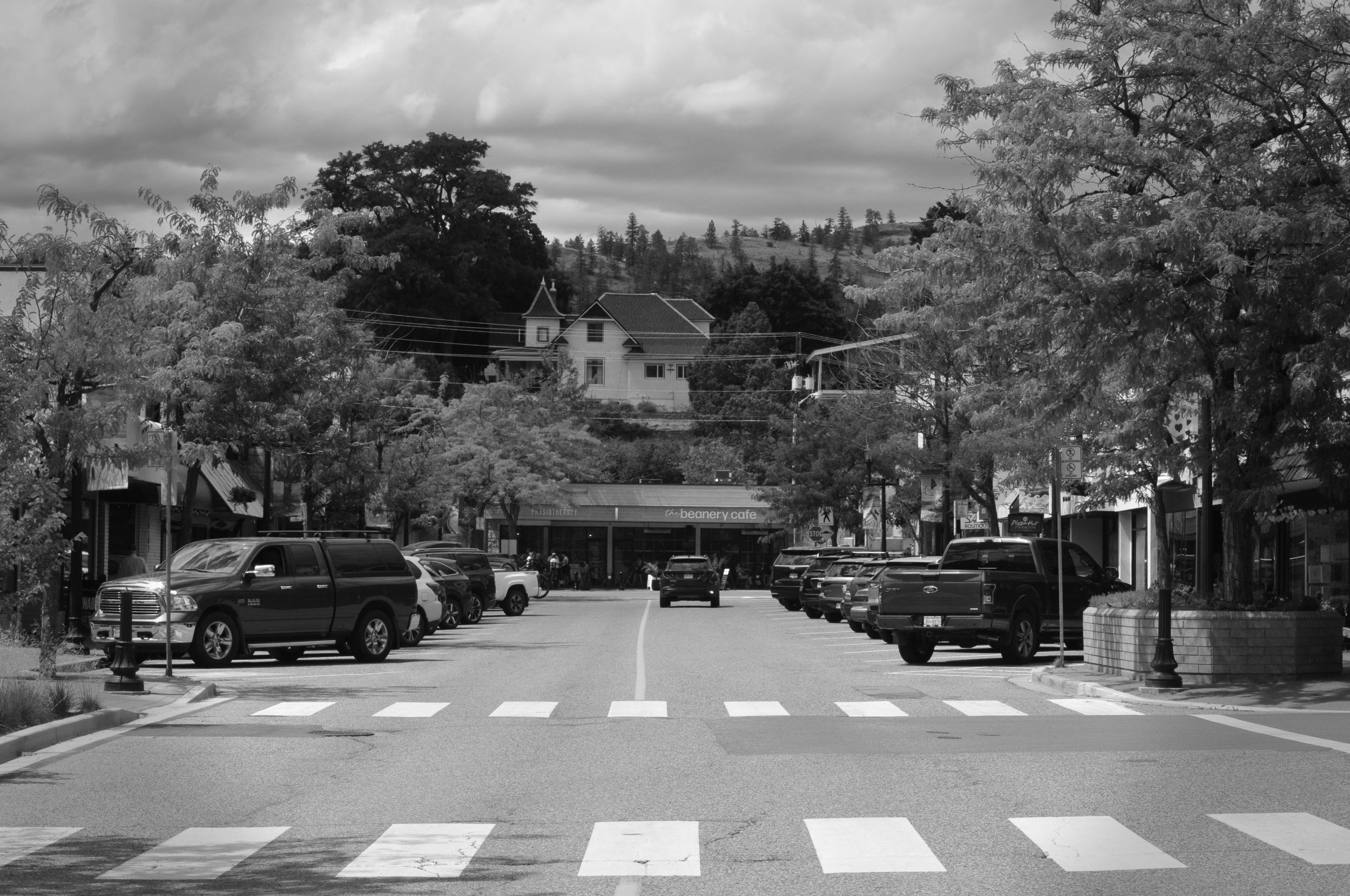
We’ve all become accustomed to having a phone within easy reach. We snap a picture of anything (and everything) with the camera attached to the mobile phone in our pockets, relying on the computational photography computers in our hands. I shot this set on an old-school DSLR camera with a fixed lens and in black and white to challenge my skills with composition, framing, and technique while exploring the beautiful and quaint downtown Summerland, BC.
Read More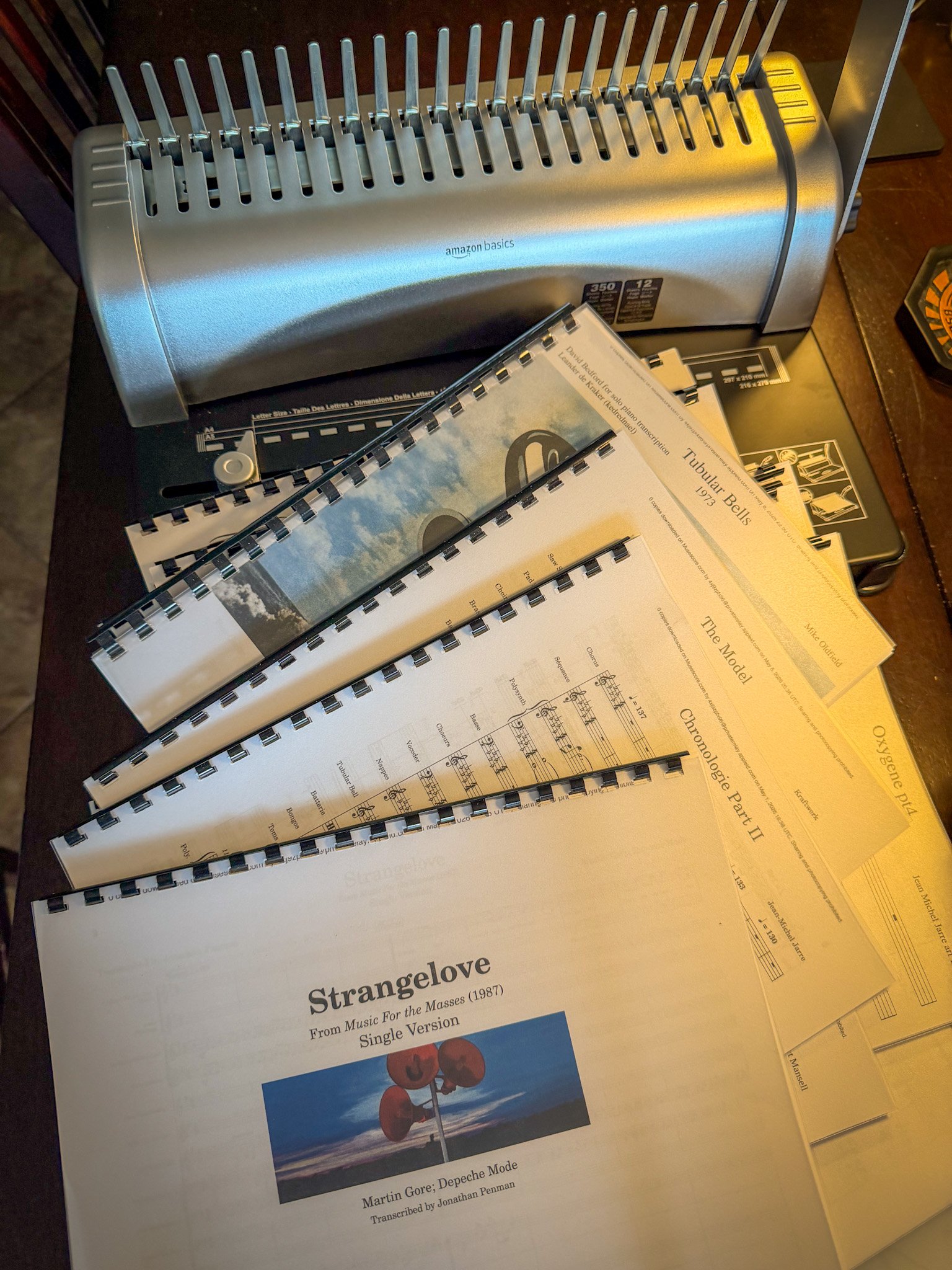
I’ve recently discovered a problem, and, after some soul searching for a viable solution, found myself digging back into technology that I haven’t used in cough 25 years. It’s stationery-related (perhaps one would even say Stationery Adjacent), but first, a little background.
Read More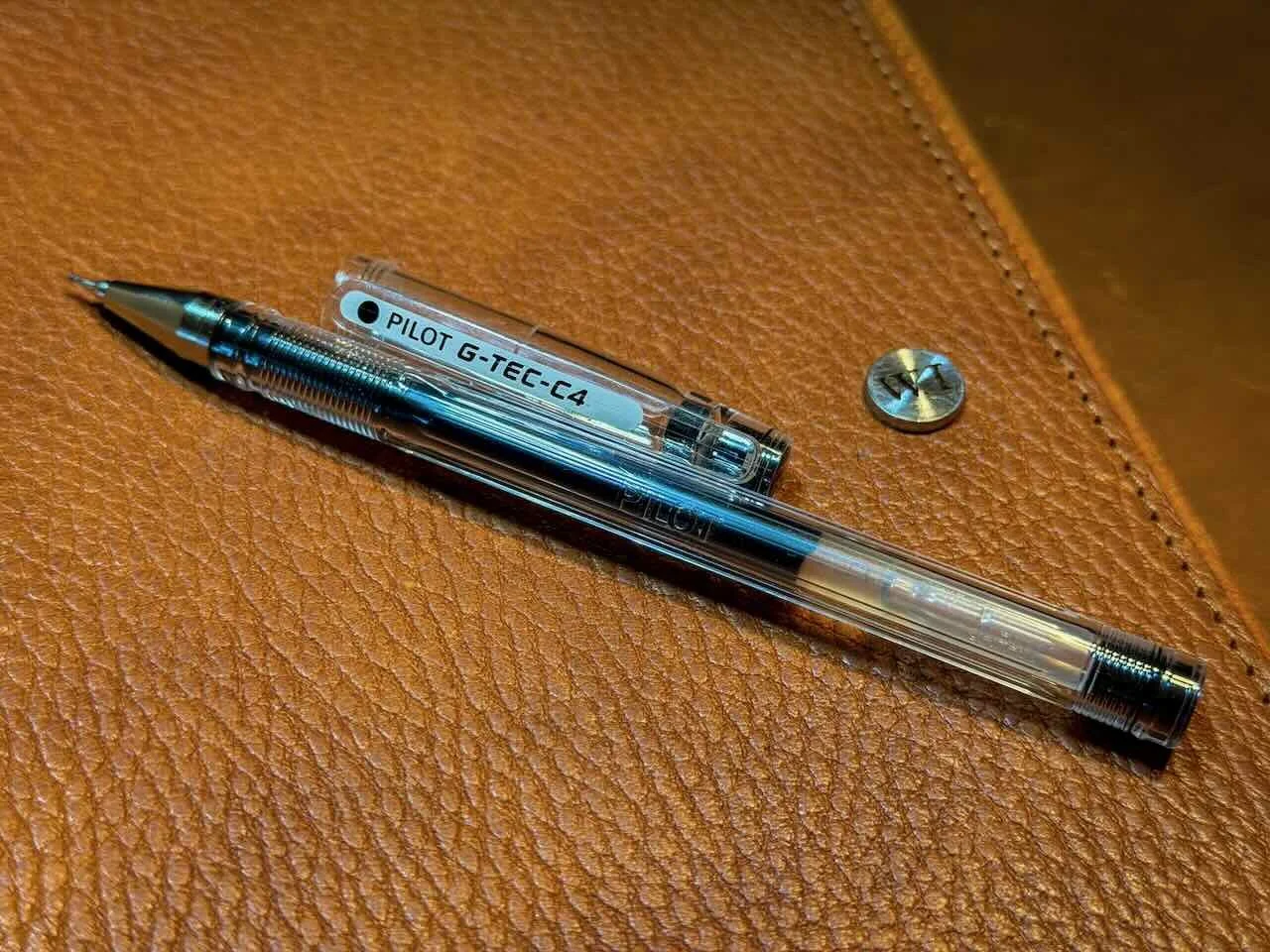
Pilot G-Tec-C4
Known in other markets as the Hi-Tec-C for reasons unknown.
Regular listeners of my podcast, Stationery Adjacent, will know that I used to write all about my fascination with fancy pens on my now-defunct blog, Write Experience. And, as a recovering stationery blogger, I continually find neat pens, paper and ink that I’ve collected and stashed around my house - often in one of my vintage roll-top desks, many drawers (36 drawers, not including the built-in cubbies).
I was organizing some stuff the other day and found a long-lost Pilot G-Tec-C4 (known in other markets as the Hi-Tec-C for reasons unknown). This pen has languished in a drawer for at least 5 years, so this isn’t a cutting-edge, new product review. However, as I uncapped it and wrote with it, ink flowing straight out of the drawer, I was amazed by the quality of the writing experience, which I’m not sure I ever gave it’s due before.
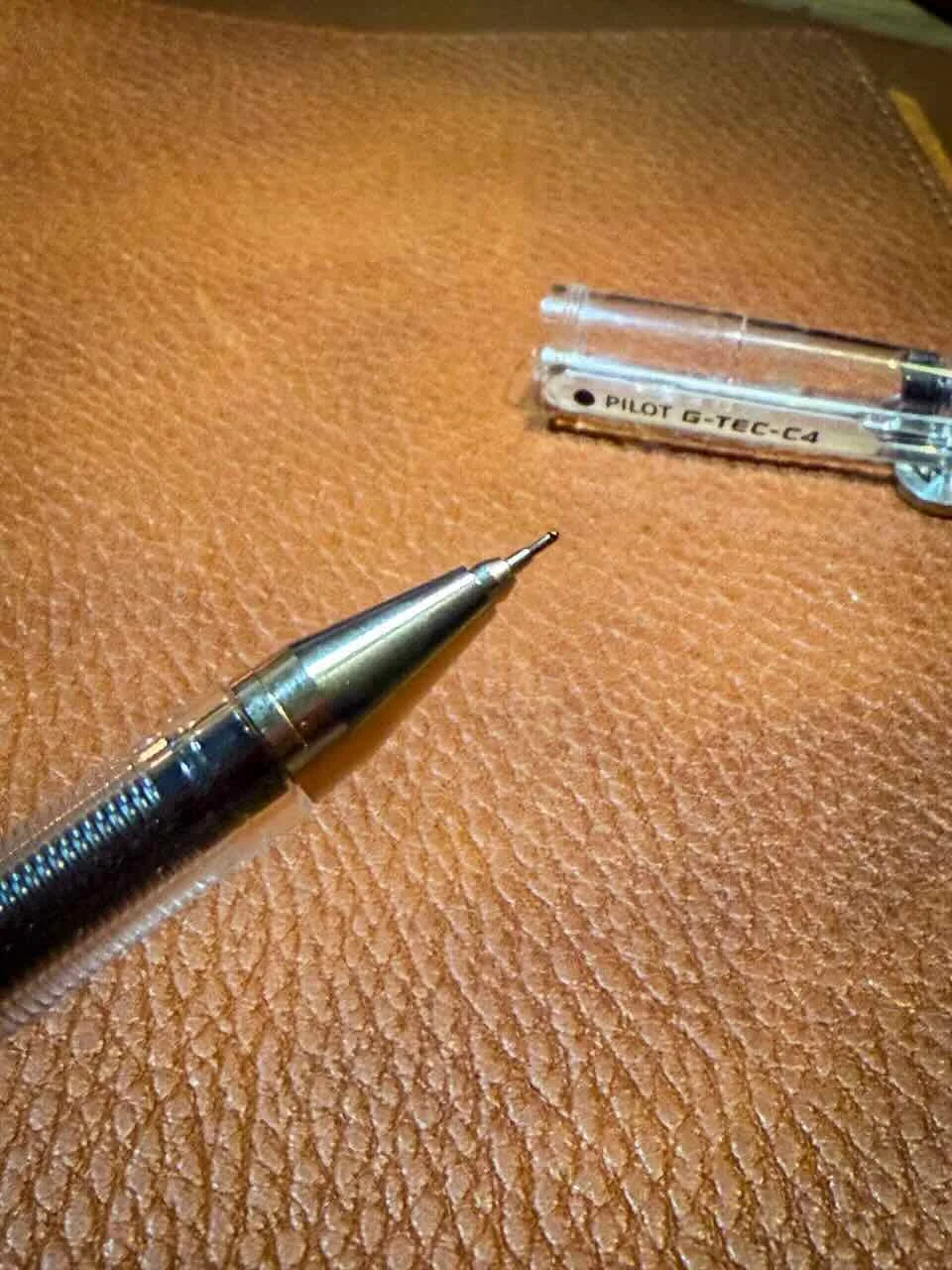
So what is the Pilot G-Tec-C4? In case you can’t tell by its catchy marketing name, it’s an ultra-fine rollerball pen in a crystal-clear barrel. It’s what my cohost, Stu Lennon, would call a hypodermic needle, as the tip is only 0.4mm wide, which results in a written line of only 0.2mm. This is not a signature pen - flowy writing flourishes will not be your friend with this pen. But the bio-polymer ink, which is apparently made from a resin using a micro-organism similar to yeast, flows exceedingly well. Info courtesy of Cultpens
I don’t know exactly what “micro-organism ink” means, and I’m not sure I care enough to dig down a Google rabbit hole, but what I can say is that this ink does not evaporate in the pen barrel, even after 5-plus years of living in a desk drawer. For a micro-tipped pen, the ink flow is quite amazing. The tip glides on the paper, or at least it does if you have a soft-pressure writing style like mine.
The ink starts right away, as soon as the pen touches paper, which is a pet peeve of mine with many ball-point pens. And the flow continues uninterrupted while the tip touches paper. Unlike those awful blobs that accumulate at the tip of some pens, this pen just puts down a perfect line.
Dry time is pretty solid as well. In testing, I can generate a very small smudge by rubbing the ink for 1-2 seconds after writing a line, usually just at the start and stop of the line, which I guess is slightly thicker. After 2 seconds, it’s completely dry. I think this solid dry time would make this ink perfect for lefties, or anyone using less-than-quality paper.
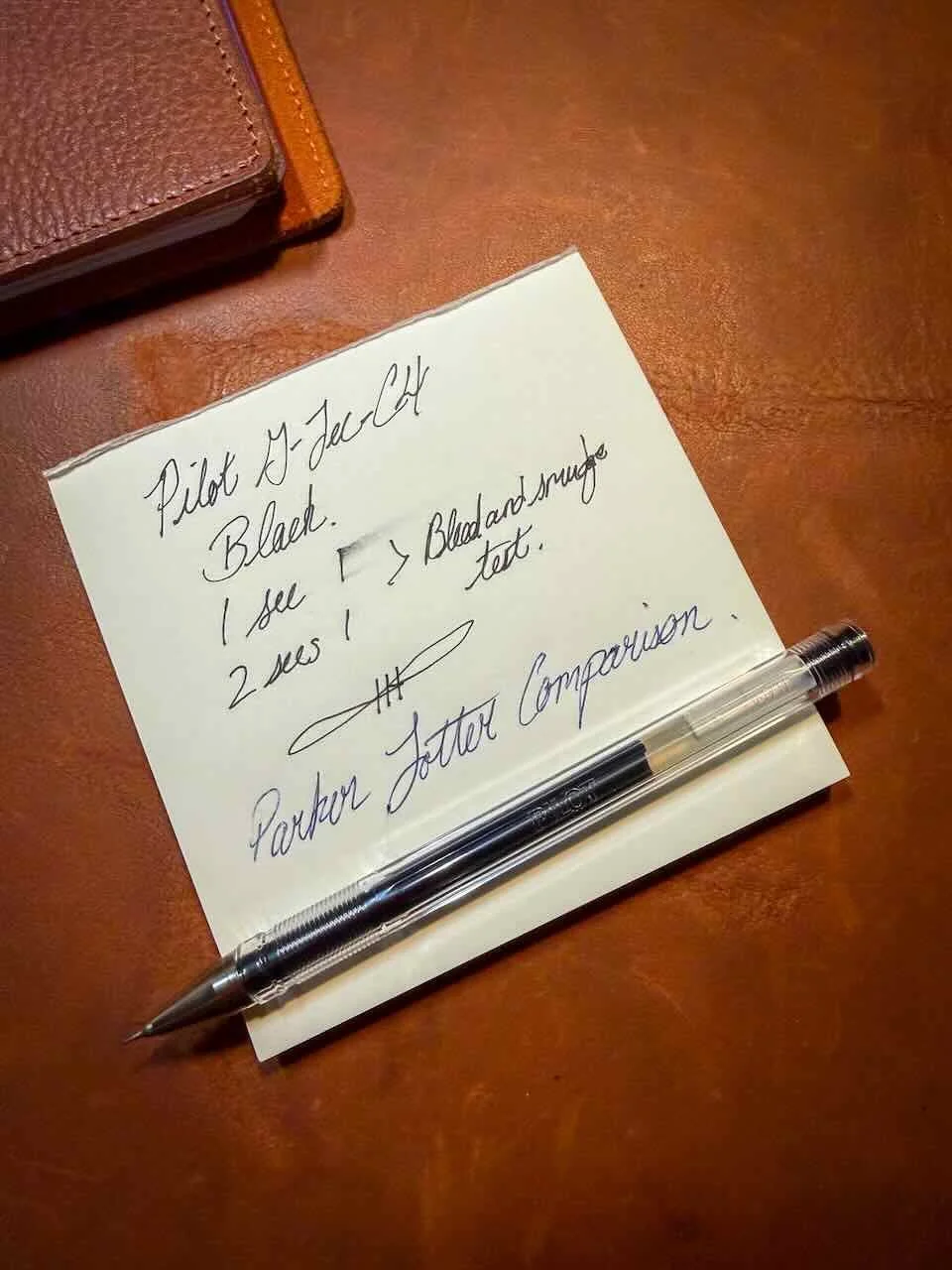
I tried this in my William Hannah planner, which requires the use of blotting paper with any fountain pen, even my Japanese fine-nibbed, and this created solid, dry lines.
My pen is black-inked, which is one of my least favourite colours for writing. Other colours are available, and likely somewhere else buried in the desk-of-many-drawers. But the black is a solid performer and looks great on the page.
The micro-organism doesn’t like highlighters, as a little smudging does occur, but it’s not terrible. But, something to think about.
I see that these are currently available on Amazon and at many big-box stationery stores. I already have a 5-pack in my cart in different colours, as I’m that impressed with this little pen.
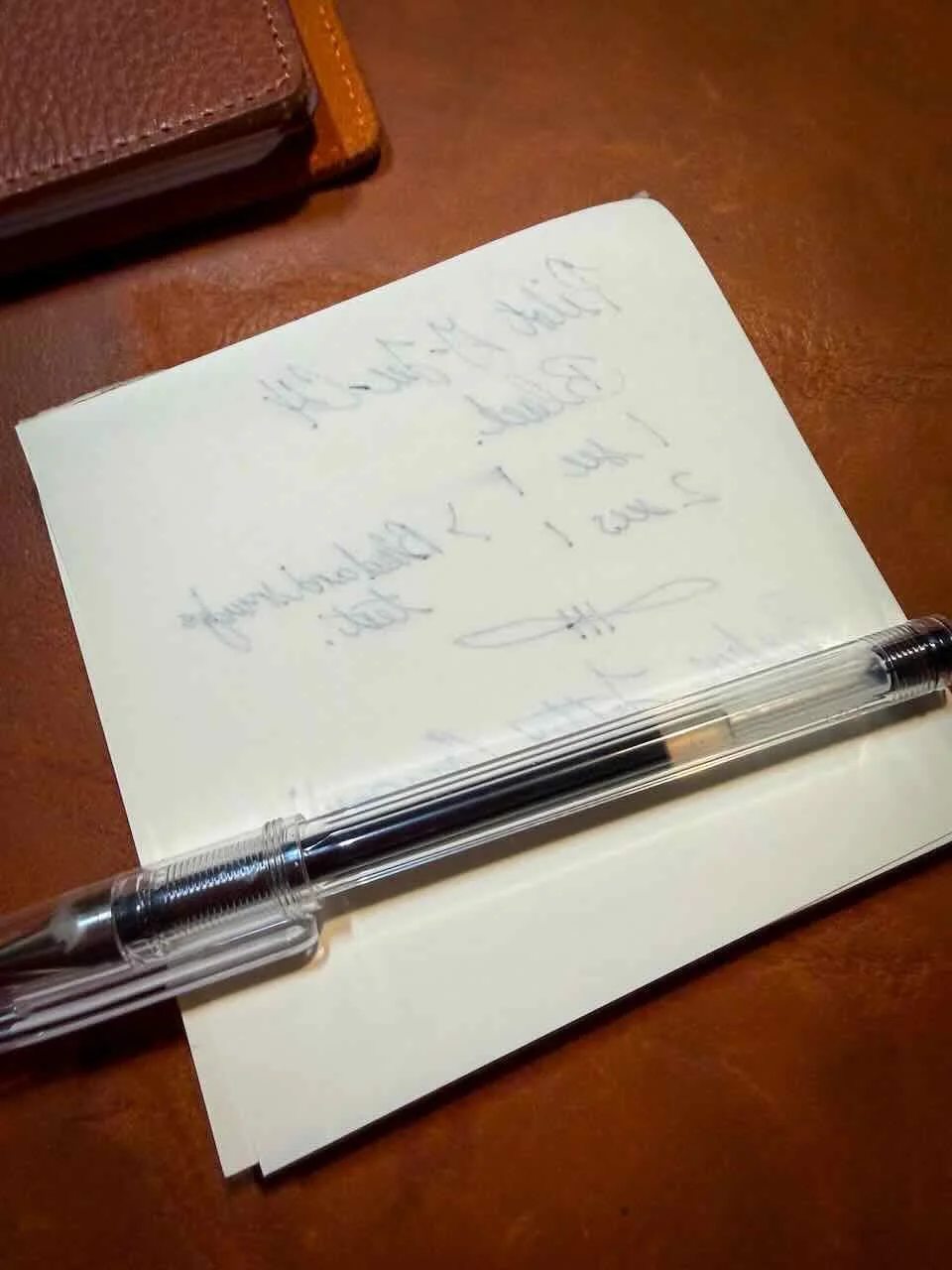
It’s a basic, crystal-clear barrel, which means it’s made of clear plastic. The barrel is quite thin - think about the size of a Bic Crystal. For most people, this will be fine, if not the most comfortable, for long periods of writing. I have quite large hands, and it’s a little on the thin side. I can see that if I were trying to write the next great Canadian saga by hand, this would get uncomfortable for me. But for a page or two of journalling, I’d definitely recommend it.
Solid pen. And a surprise at just how much I love it. For now, it’s displaced some high-end, gold-nibbed fountain pens in my daily rotation. Which says a lot.
Extended warranties. Those horribly awkward conversations with the “business managers” at auto dealerships, where maximum pressure sales are applied, and negotiations become stressful and long. How polite do I need to be, and how long must I listen to the sales pitch and the hugely inflated ask at the end to be polite? It’s a dance I always hate. It’s well known that these items are where dealerships make the most profit, which is why they’re so heavily pushed.
Over the last few years, I’ve seen these extended warranties be pushed more and more frequently outside of the auto industry. Occasionally, it even works. I mean, I do pay monthly for AppleCare insurance on my iPhone to replace the screen should I drop it. I have never dropped a phone (touch wood). I justify the small expense because the phone is extremely critical to my life, a fast, efficient repair is worth the money, and replacing the entire phone is expensive.
The one place I’ve seen these warranties pop up that I have a harder time with is furniture. We purchased new couches last year, and it came with the hard sell on a hefty premium to insure them for a number of years. Odd, as I’ve never had a catastrophic failure of a couch or bed. And I can’t remember the last time a chair failed and dumped me on my rear.
This weekend reminded me of this craze. I went to a big-box office supply store in a nearby city because I needed a new, armless task chair for my recently rebuilt music studio, and my previous armchair was starting to delaminate. Armless chairs are important for playing guitar, and, like shoes, purchasing one without trying it on is ill-advised.
The big-box store, Staples, coincidentally had a sale on in-stock chairs, so along with the inexpensive studio chair, I also purchased a new chair for my analog writing desk - this one comfortable and high-backed, as I do like to nap in it between spurts of inspiration, or, to be honest, just to avoid things like work.
Armless task chairs are surprisingly rare, but I found an inexpensive one that was on sale for $99.99. The other chair was still a very reasonable $179.99. Given that both are task-specific and unlikely to be used for an hour or so per day, and often not even daily, I felt these were good value for the money.
On the way to the cashier, I was waylaid by a floor assistant’s extended warranty sales pitch. And then this happened again when I got to the actual cashier. I do have to hand it to Staples that their training program on warranties is pretty extensive, as I had two different employees recite the same speech about the benefits of purchasing this warranty that my lucky chairs “qualified” for.
Fair enough. Everyone had a job to do. I remained polite and let the employee recite the spiel, as dealing with the public is a tough job that I wouldn’t enjoy. What blew me away was the high price of the warranty on these chairs, which I guess justifies the corporate-mandated hard sell.
For the inexpensive Staples-branded armless task chair, the cost of the three-year extended warranty was $15, or 15% of the purchase price. However, hold your beer: the warranty on the other chair costs $49.99, which is almost a 28% premium!
Unsurprisingly, I declined, and I’m sure I will be fine living with the consequences of such an expensive risk.
But the best part was when I was assembling those chairs in the evening and reading the manual. Both chairs come with a 7-year warranty on any part. So, what would I be paying extra for the 3-year extended warranty? Peace of mind, I guess. The “easy-button”?
But a company selling an extended warranty that duplicates the manufacturer’s pre-existing warranty. That’s pretty scammy. Come on, Staples, you can do better than that.
I remember the first time my wife found a black widow spider nest on our upstairs deck, the summer after moving to this area. I was ready to purge the area with fire. Napalm, propane torches, gasoline fires; I was considering all options. But, as the deck is attached to the house, I knew this probably wasn’t a good idea as I didn’t think the insurance claim would go in my favour.
Read More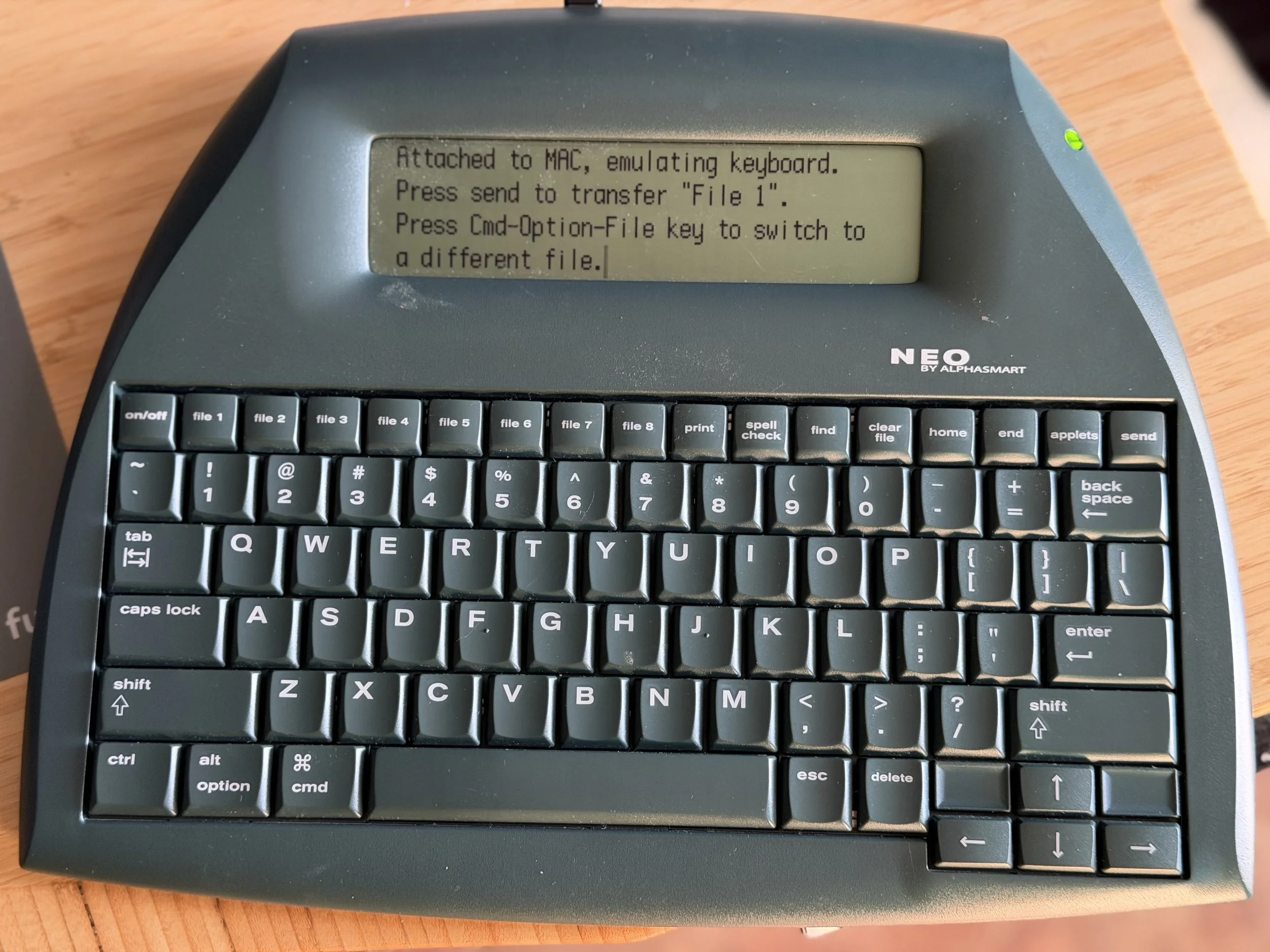
I’m writing this on an antiquated, limited piece of technology from the early ‘oughts. I’m avoiding my nearby devices that have enough computing power to launch an Apollo rocket, in favour of a little keyboard with a non-backlit, black-and-white LCD screen that shows only four lines of text. And I’m loving it.
Read MoreI’m of the age where I grew up to the music of Jean Michel Jarre, a pioneering electronic musician, whose concerts shut down entire cities in the 1980’s. I love his music, and he likely had a strong impact on the music I still listen to today.
I’ve had various electronic keyboards and synthesizers since I was a teenager. And, for a while, I even had dreams of becoming a music engineer. It didn’t last, as producing music that I wasn’t passionate about didn’t do it for me. So, instead, I went to school for accounting. Not sure how that happened.
It’s now more than a few years later, and my interest in music has become a problem. I keep expanding my repertoire of instruments I like to play around on, and have added enough extra instruments lately that it required a full rebuild of my home studio. A new rack, new dedicated computer, more mixers, amplifiers, and guitar stands.
Sitting in my studio, I realize that I do now feel like Jean Michel Jarre - I’m surrounded by noise makers of all varieties, including a couple that I even know how to play. It’s like the cockpit of a rocket ship. Everything lights up, begging me to press buttons. Seriously, it’s a dream from my childhood. From guitars to drum machines to a theremin, many of my electronic music-making tools are within easy reach.
I’m like a kid in an electronic candy-store. Radio Shack, anyone? Can you go back in time? Likely not, but I can have fun along the way.
Now if only I had any musical ability! Which is the start button?
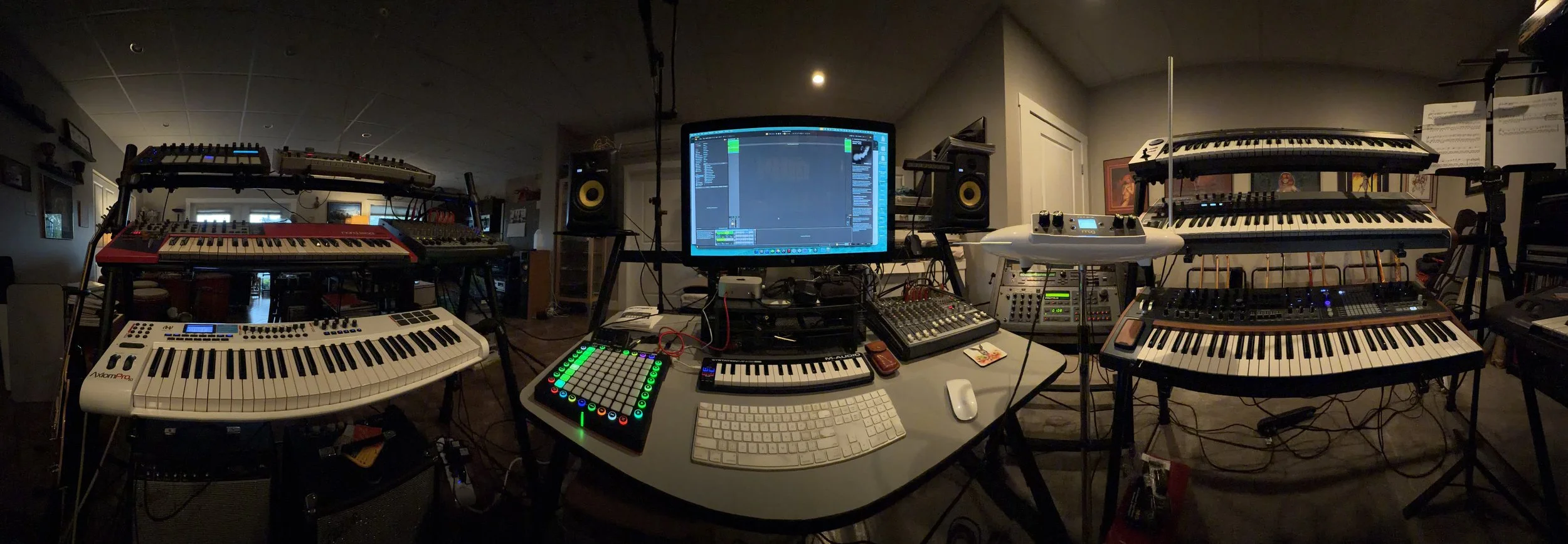
The front view.
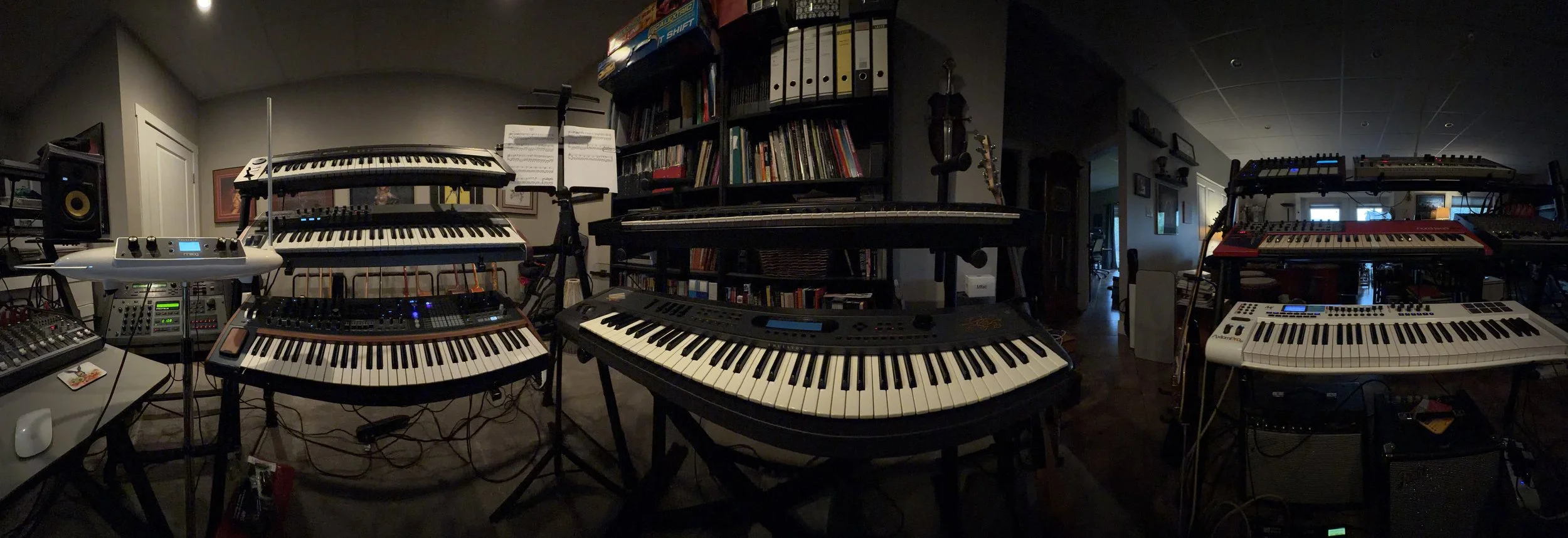
The rear view
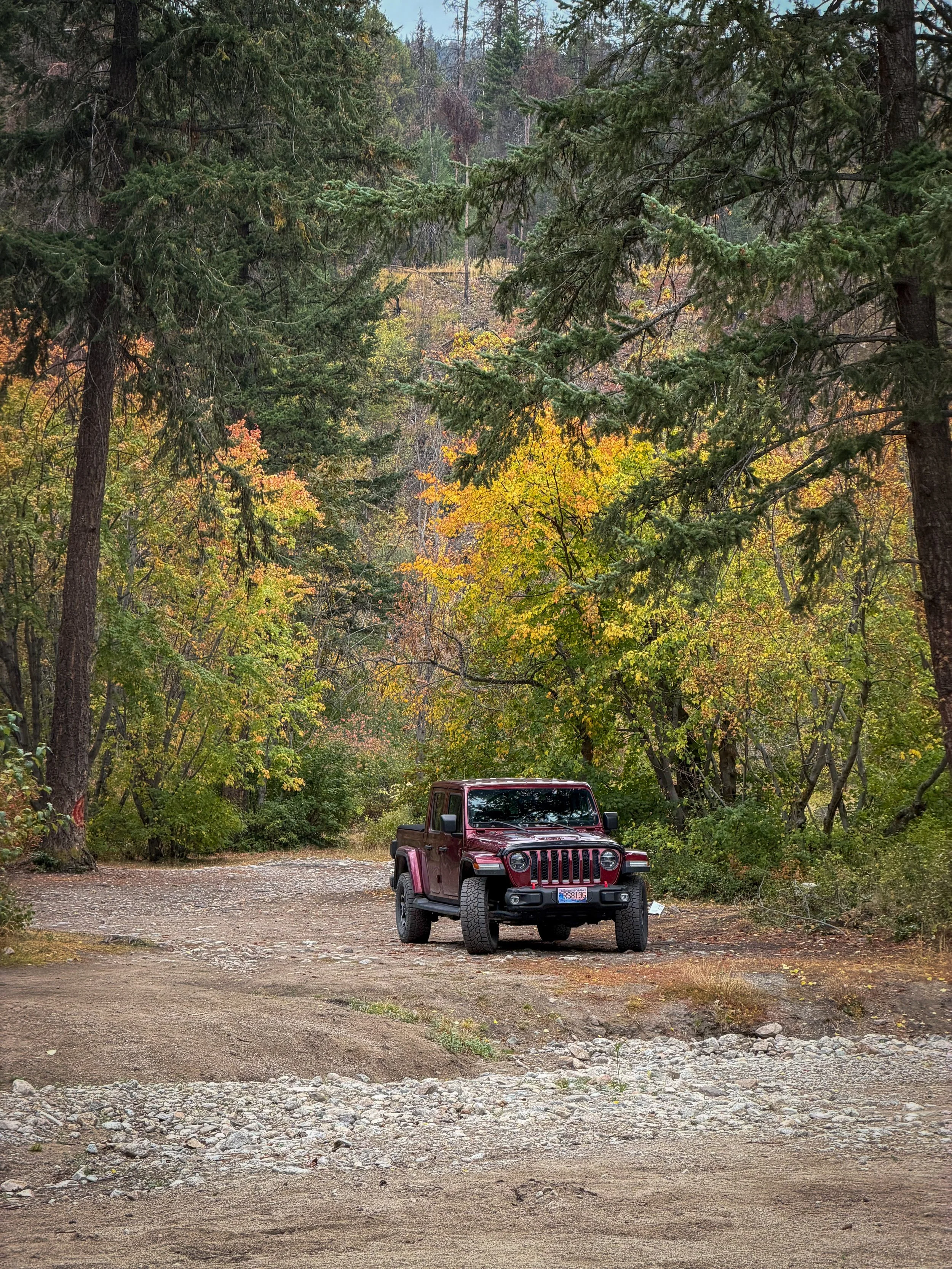
What better way to start the New Year than with a winter truck camp with your amazing and spoiled puppy? Join me on my adventure and enjoy the crackling campfire.

I learned outdoorsmanship from my relatively short time in the Boy Scouts of America. My time was cut short when I left the country, but the memories of hiking, camping, and learning skills linger with me to this day. Strangely, other interests led me to be a city dweller, and I let these outdoor skills atrophy for many years.
I have fond memories of reading The Official Boy Scout Handbook, an illustrated, wide-ranging manual given to scouts. From camping to swimming, knot-tying to first-aid, from life-skills to good citizenship, this book has something on everything. My copy - doodled on, falling apart and fixed with masking tape, water-stained, and dog-eared beyond any other book I own- didn’t look like it would be a safe choice to re-read.
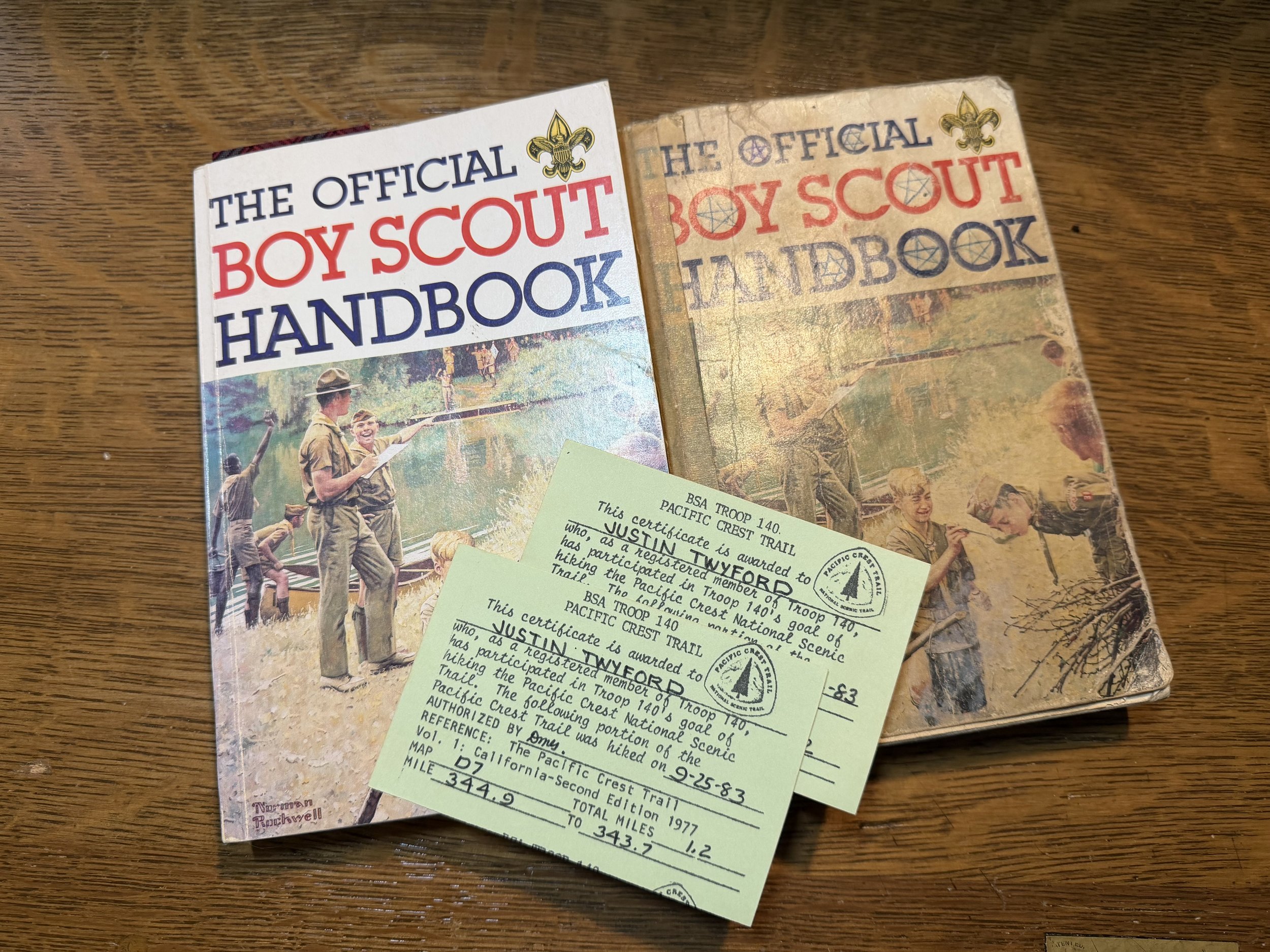
My new to me reprint beside my original, well-loved copy of the Boy Scout Handbook.
I found a replacement reading copy on eBay recently for a very affordable price. And, I’ve started reading through the book yet again. I have resources that cover many of the topics in this Handbook, but the ease of reading, as it was designed for teenage boys, yet the breadth of each subject is super refreshing. It’s hardly Nessmuk, but it’s a refreshing read, even if dated.
I hadn't thought about my time in scouting until I rediscovered my old Handbook tucked into a corner of a bookshelf. Opening it and finding records of some of my hikes took me back many years. I regret not pursuing Scouting in the other countries I lived in after leaving the States. Reading through the “program” again reminded me what a well-rounded person a scout would be if they had grown up following the Boy Scout tenets. The oath, for example:
On my honour, I will do my best
To do my duty to God and to my country
and to obey the Scout Law;
To help other people at all times;
To keep myself physically strong,
mentally awake, and morally straight.
My next thought is, why isn’t there a group like this for grown-ups? Getting outdoors and keeping physically strong, pursuing higher thoughts, and living with good morals through a close network of like-minded people. I’d sign up in a hurry.
I’ve been working from home with my dog for too long, apparently. We’ve become bonded in a way that may not be normal, as we have developed close communication. She is demanding, and I give in to her needs. I really noticed it this Christmas season when Coco started asking for solo evening drives to see the local Christmas lights.
Coco always loves driving in town - as it means we go for a walk and she gets to see people - my damned extroverted puppy. I installed a semi-permanent raised seat in the back of my Jeep for her - she can sit safely and look out to see the world going by, which she loves.
Our first trip involved a shopping trip into town, choosing the dog-friendly stores to spend my money in. On the way home, I asked the dog if she wanted to go and see the lights in town. She got really excited and enjoyed the drive. However, I’m not sure if Coco prefers the lights or the many inflatable Christmas lawn decorations.
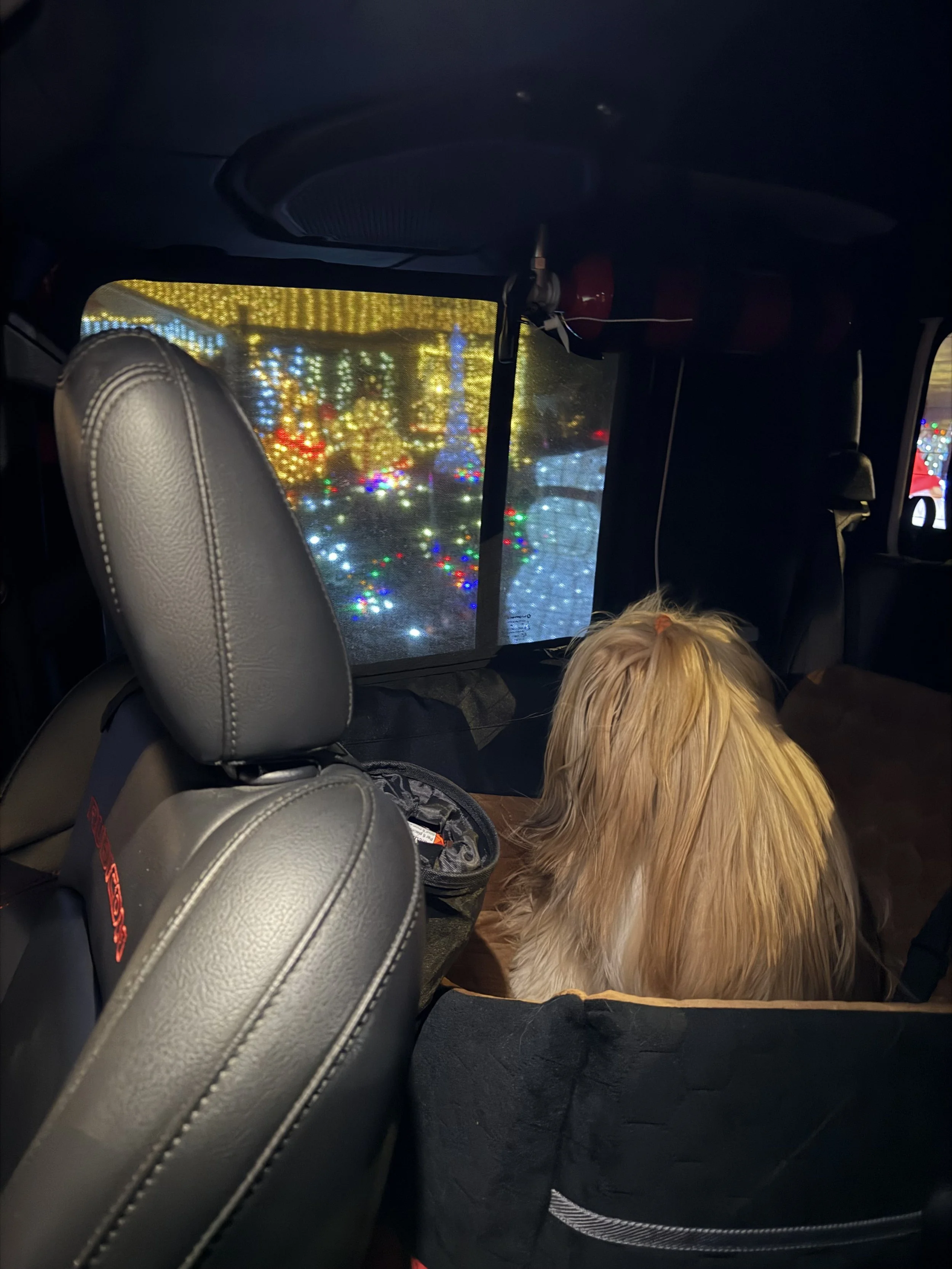
Coco watching the Christmas lights
A few days later, I had to pick up a few things in town, and I told Coco we would go for a ride. My lovely wife picked up what I needed as she drove through town on the way home, so I didn’t have to go there. A couple of hours later, Coco was sulking and staring at the front door. I asked her if she still wanted to go for a car ride, and she jumped up on me immediately.
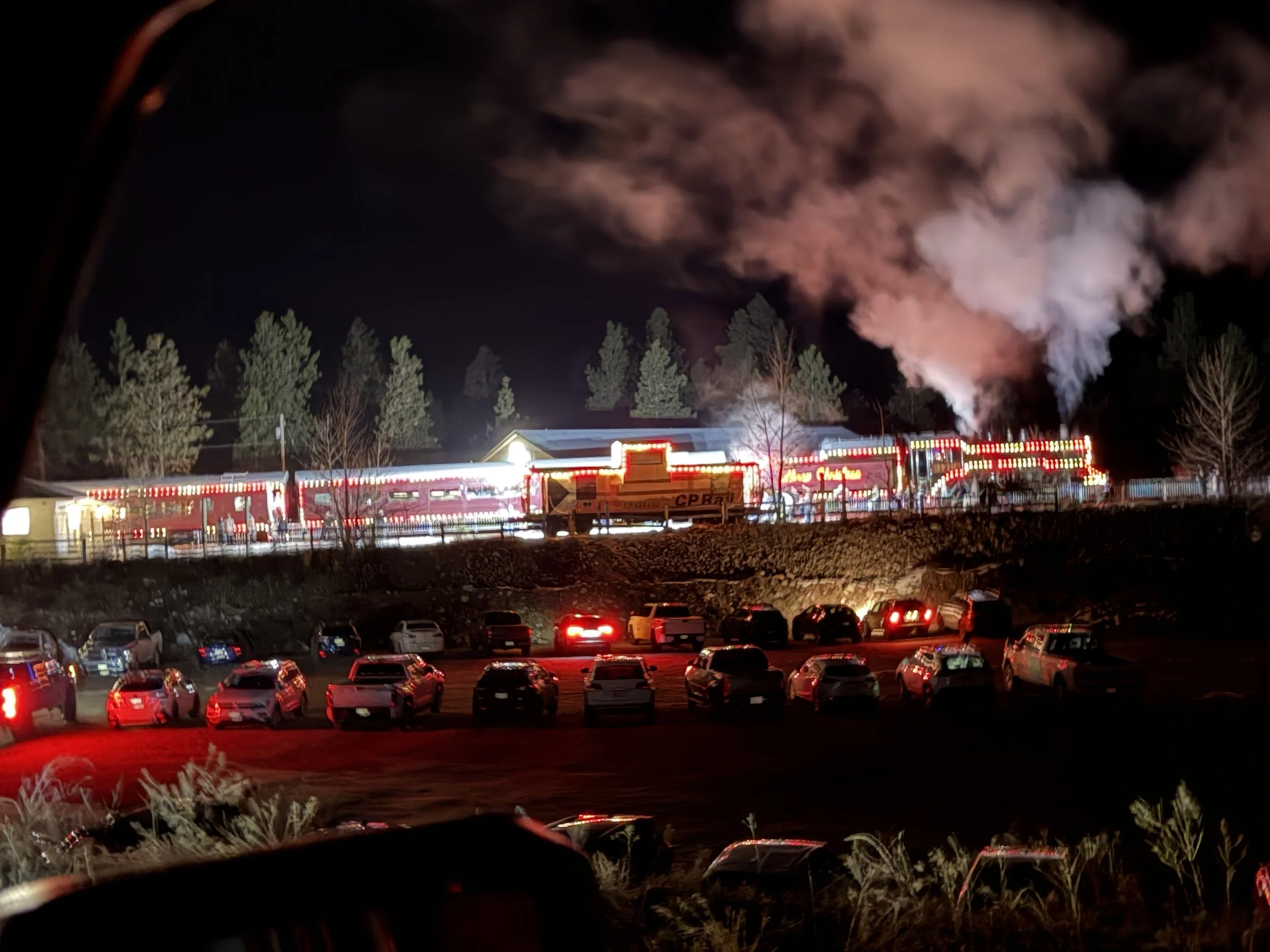
The Christmas train
I bundled her in her seat, and we drove out to see the Christmas-lit Kettle Valley Railway train. It was beautiful, and Coco absolutely loved watching it. I can tell, as we came home, that she was delighted. Demanding dog.
Our town has a wonderful tradition of Christmas Light Ups. All of the town holiday lights come on at the same time on the last weekend in November/first weekend in December, depending on the calendar. It transforms our quaint Main Street into something out of a romantic Christmas Movie. This year was slightly marred by the fact that the snow-line was above the downtown area - but as our home is higher than the town centre, the snow at home made our own light up much more festive.
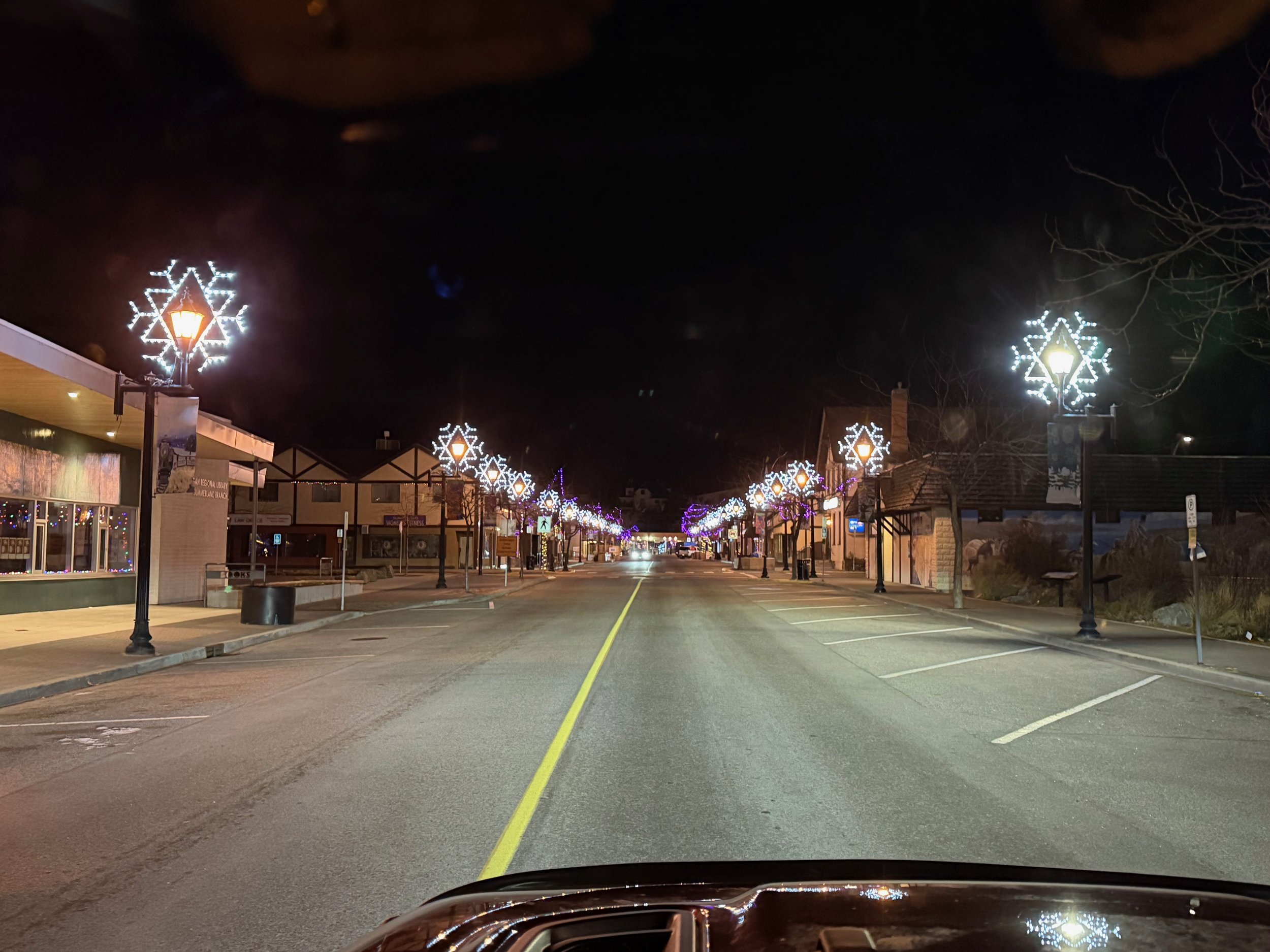
Our local vineyards also reopen for a couple of evenings in early December for a tradition called Light Up The Vines - which is hugely popular, and very, very busy.
We stopped by three of our local wineries on Saturday night, for a combination of wine tasting and dinner. At the first, Lightning Rock, I tried out my new camera. The other stops were just full of people having fun and, I suspect, not wanting to be on a camera. We also drove past some of the crazy community lights - everyone gets into the season. Enjoy the short video.
Lighting Up The Vines
Dance of the Sugar Plum Fairies by Kevin MacLeod is licensed under a Creative Commons Attribution 4.0 license.<https: data-preserve-html-node="true"//creativecommons.org/licenses/by/4.0/>
Source: <http: data-preserve-html-node="true"//incompetech.com/music/royalty-free/index.html?isrc=USUAN1100270>
Artist: <http: data-preserve-html-node="true"//incompetech.com/>
I've been busy around my house this summer, and I didn't realize until today how much I've missed nature. Ironic, as I live in a fairly rural space, with orchards and vineyards just the other side of my neighbours house. But I had a longling for solitude and quietness - the type that only remote nature can provide.
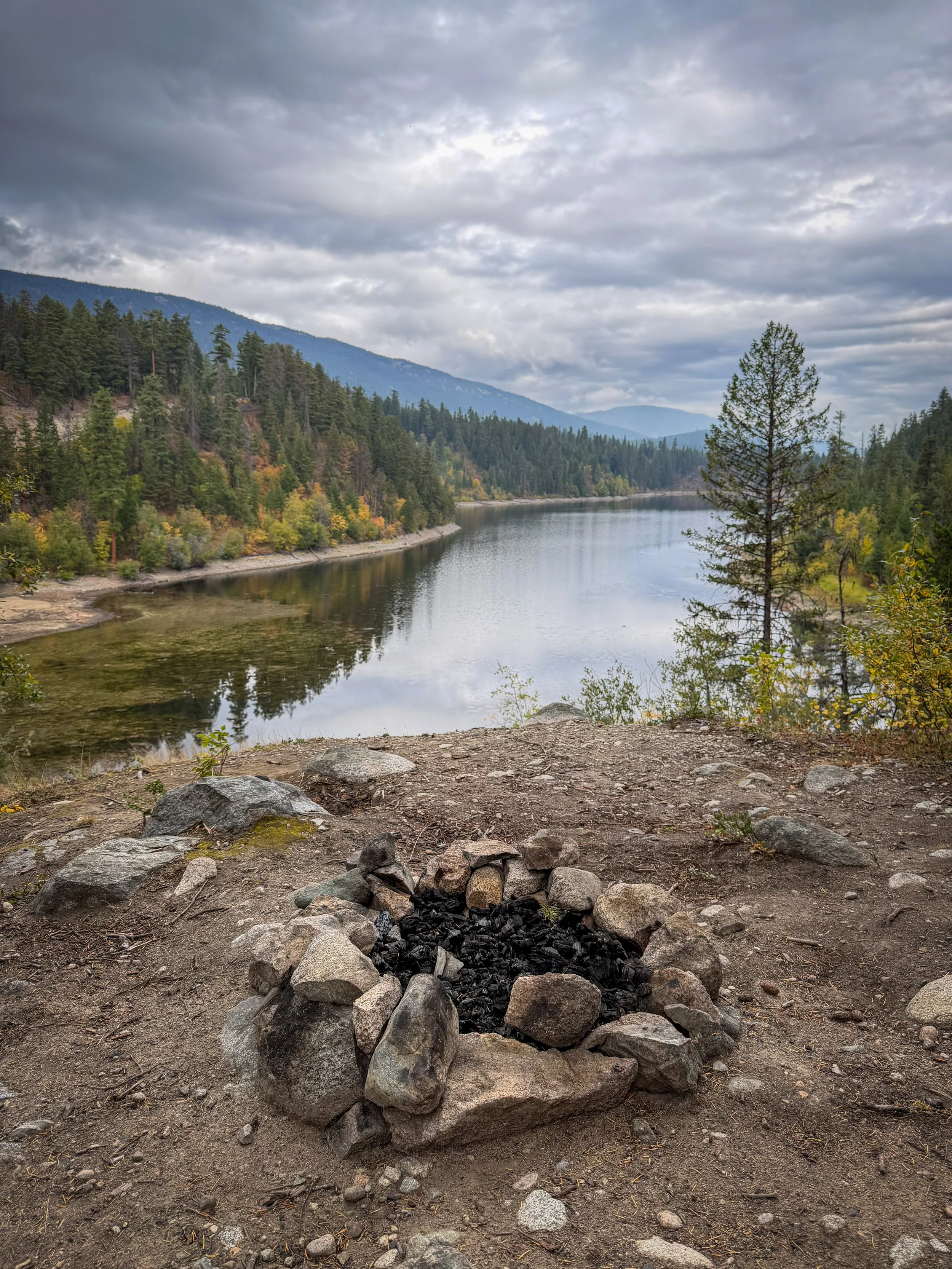
Today was September 30 - the National Day for Truth and Reconciliation. And what better way to honour the elders of the land than to visit nature. I took a jaunt to a local provincial park - a place always favoured by boom-box toting, pot-smoking tent campers during the summer. Come autumn, and the vibe is different, and much more to my taste. In fact, we were the only people at the lake today. Well, us and the eagles. Which is exactly my type of solitude.
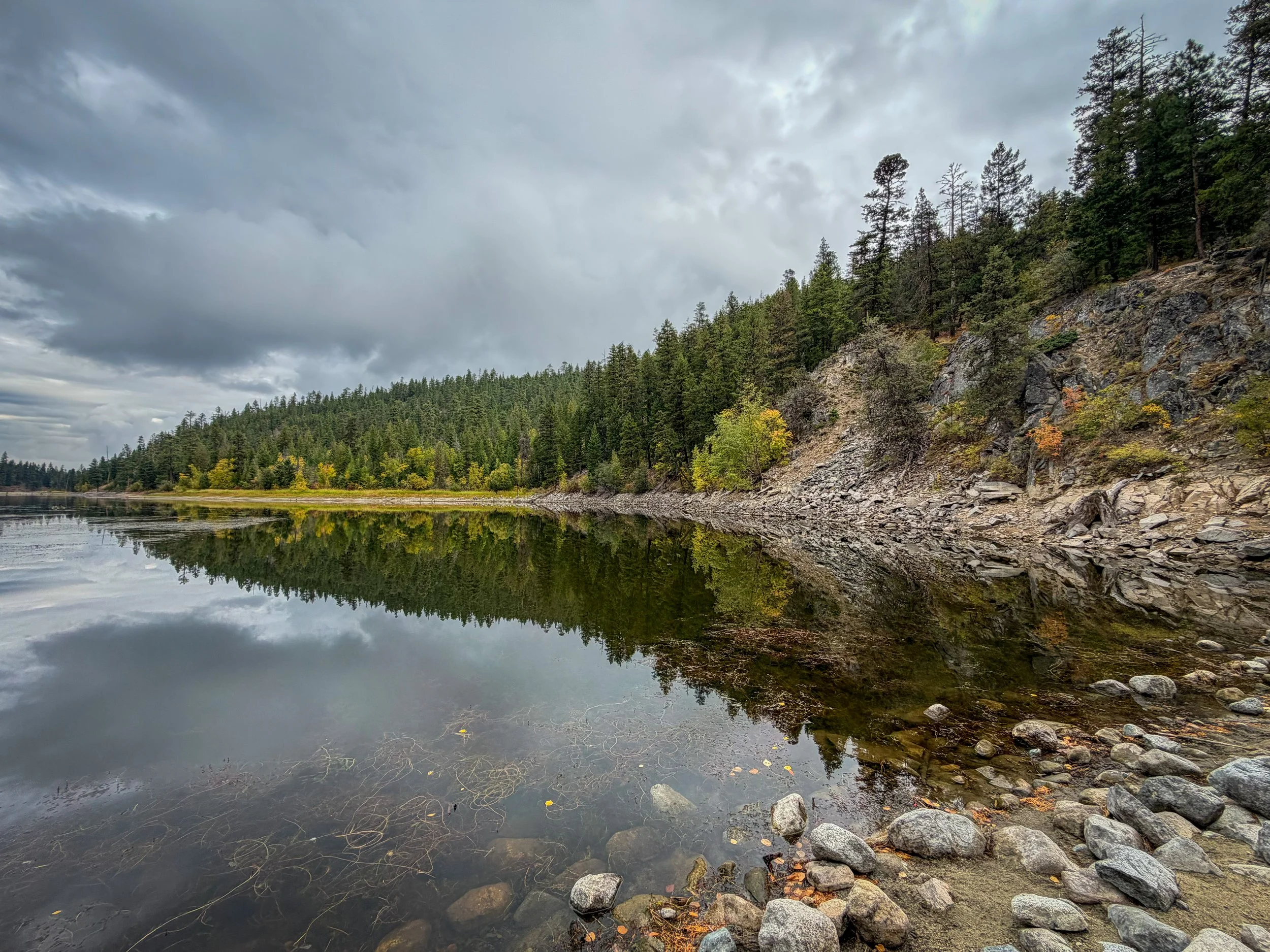
The lake, at the end of our dry summer season was surprisingly low. But, even the low tide didn't dull the views from the south end of the lake.
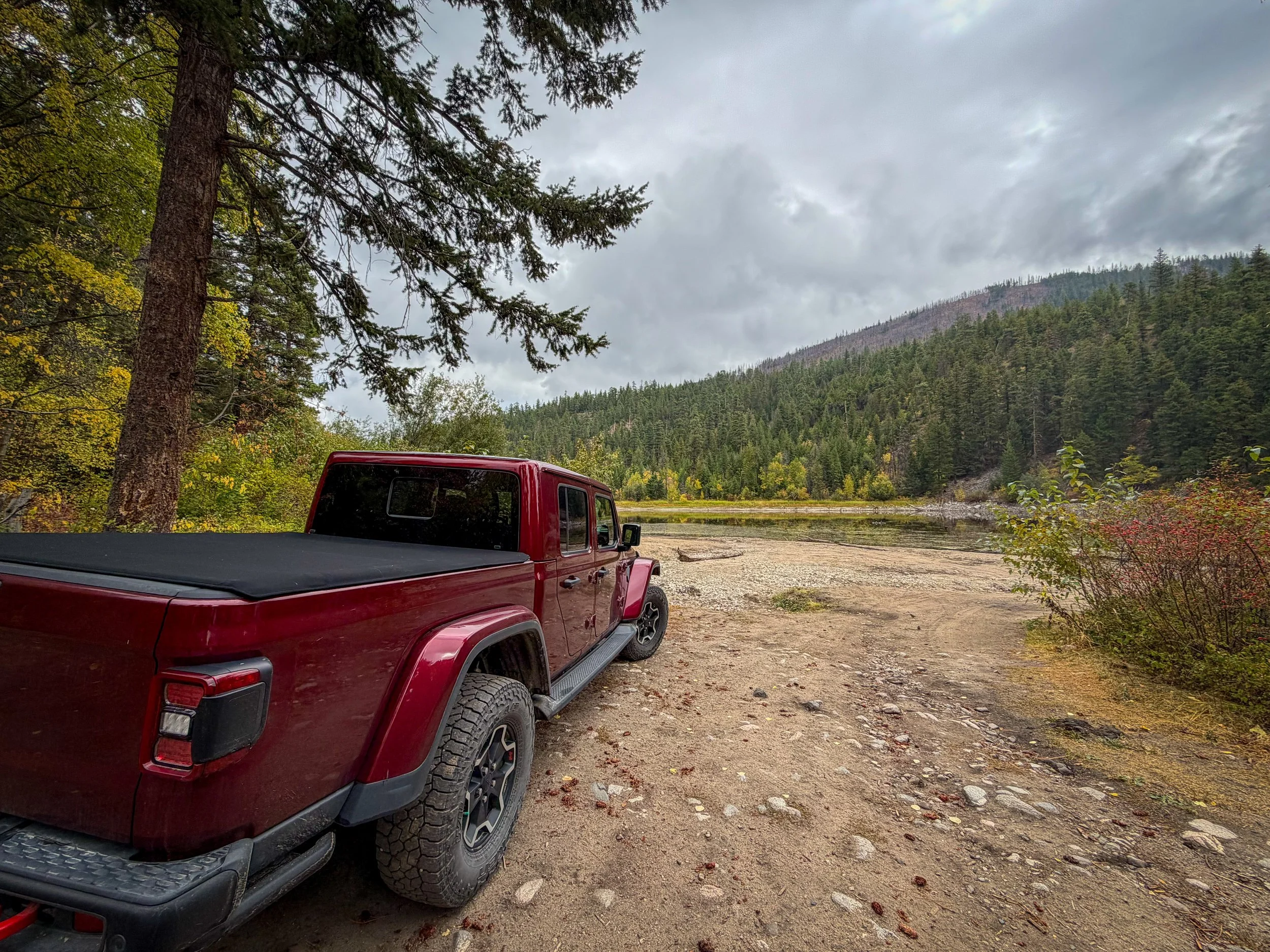
I needed some quiet time in nature, and this park - only 30 minutes outside of Summerland, provided that. The beginning of the changing fall colours of the trees really brought this home.

Feeling stuck? Find your own version of this lake. It maybe closer than you think.
It was supposed to be beer and pizza. Hang out in my bar. Talk some BS and generally destress. It’s just a few guys getting together for a few hours on a weeknight to chill and hang out. With family and work commitments, it’s something that gets put off far too often.
My friends are musicians, and fortunately, I have a relatively decent musical setup at home. As the night went on, we listened to different types of music, discussed the music of our youth (yes, this is something that aging men do!), and finally had to try out the various instruments I had lying around.
We played some great tunes, but it wasn't until Mrs. T subbed for me on my synthesizers that I thought to record a snippet of what we were playing.
Have a listen:
It came out brilliantly. What a fantastic way to spend a Tuesday evening!
How was your evening? If it wasn’t quite as fulfilling, I recommend setting up an evening with the most talented people you know. You may be amazed at what happens. I certainly was!

Coco looking very autumnal
Strange day. 31C outside as I write this, yet it feels very autumnal. The sunrise is getting later, the sunset is getting earlier, and the weather is very changeable as next week is showing highs of only 2/3rds the temperature. Gourds are in the gardens, including a wonderful feast of patty pan squash that I just picked.
Last Saturday was the local Summerland Fall Fair. Apparently, this was the 111th annual event. I think the organizing committee missed the perfect marketing tie-in to Bilbo Baggins' eleventy-first birthday party in The Lord of the Rings, but perhaps they are too busy farming to read such a meaty tome. Our community was founded on orchards and produce, before wine became the big thing that it now is. It was a wonderful event - booths showing off the best of the district, games and activities for the kids, and the bigger kids as well for that matter. And fantastic live music.
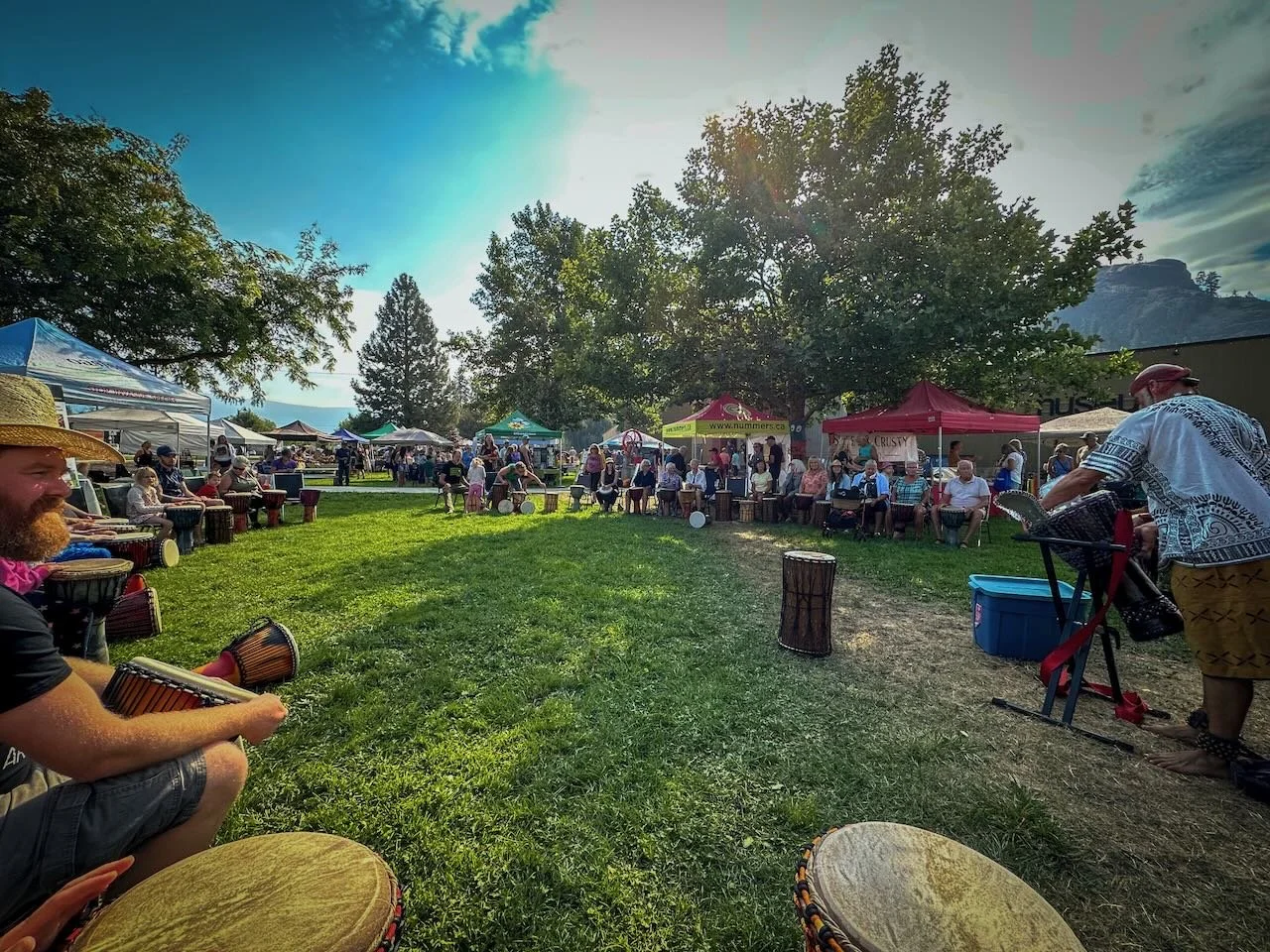
A view from the stage
Well, I say it was fantastic as I played djembe in one of the sessions, and my lovely wife also played ukulele in another. Coco and I went to watch her play, which is even more fun than playing myself! Especially as the local cake stall was there and I was happily munching on a far-too-fattening apple fritter. Yummy.

Coco watching the Ukulele group play
But the fall fair is always the turning point. Fall is coming, and the extensive list of time-sensitive projects is piling up with a fast deadline. It can snow as early as the beginning of November here, and once it snows, I may not see my lawn for 5-6 months. How's that for motivation to get things done?
Despite the stress of the tasks to do, I do enjoy autumn. I'm looking forward to cool evenings by a warm fire. And, in thinking of the change in season, I dug out my collection of Keat's to reread his ode "To Autumn". Fantastic, isn't it:
Season of mists and mellow fruitfulness,
lose bosom-friend of the maturing sun;
Conspiring with him how to load and bless
With fruit the vines that round the thatch-eves run;
To bend with apples the moss’d cottage-trees,
And fill all fruit with ripeness to the core;
To swell the gourd, and plump the hazel shells
With a sweet kernel; to set budding more,
And still more, later flowers for the bees,
Until they think warm days will never cease,
For summer has o’er-brimm’d their clammy cells.
Who hath not seen thee oft amid thy store?
Sometimes whoever seeks abroad may find
Thee sitting careless on a granary floor,
Thy hair soft-lifted by the winnowing wind;
Or on a half-reap’d furrow sound asleep,
Drowsed with the fume of poppies, while thy hook
Spares the next swath and all its twined flowers:
And sometimes like a gleaner thou dost keep
Steady thy laden head across a brook;
Or by a cider-press, with patient look,
Thou watchest the last oozings, hours by hours.
Where are the songs of Spring? Ay, where are they?
Think not of them, thou hast thy music too,—
While barred clouds bloom the soft-dying day,
And touch the stubble-plains with rosy hue;
Then in a wailful choir the small gnats mourn
Among the river sallows, borne aloft
Or sinking as the light wind lives or dies;
And full-grown lambs loud bleat from hilly bourn;
Hedge-crickets sing; and now with treble soft
The redbreast whistles from a garden-croft,
And gathering swallows twitter in the skies.
I try to have low expectations of Father’s Day. My relationship with my father was complicated, and I don’t have biological children of my own. My step-daughter’s relationship with Father’s Day was heavily impacted by the guilt of split loyalties demanded by her biological father.
It’s easy to ignore a Hallmark Holiday based on traditional family values, and that’s usually what I try to do. Unless you open social media, watch TV, or connect to the outside world, adverts and promotions for the “happy day” abound. Which can be rough if you have a challenging history, and I’d say many of us do.
My lovely wife tries to compensate for my lack of interest in the day with some special activity, meal, or nice gift, and I certainly appreciate her effort. However, this year, my wife has her own Dad to care for, and he’s got some health challenges, so even those efforts may be muted.
Not all is negative, though. Last night, on the eve of Father’s Day, I was reading the book “First Wilderness” by Sam Keith, and a passage about words that his father spoke to him hit me hard. Sam Keith relates his story of moving to the Alaskan wilderness and telling his father. His father’s reaction, quoting a few lines of Robert Service’s poem, The Cremation of Sam McGee hit me right in the feels.
““There are strange things done in the midnight sun by the men who moil for gold,” he recited. “The Arctic trails have their secret tales that would make your blood run cold.””
Sage advice, indeed, for a trek into the unknown. And this quote got me thinking about what, if any, sage advice my own father had passed down to me. What teachings could I learn from and pass down to my step-daughter? Unfortunately, I couldn’t come up with much advice (at least that was fit for publishing), but I did recollect some pleasant memories with my father, which was a nice side-effect of this thought exercise.
I remembered my dad teaching me how to work on cars as a small boy, which was necessary when I was young, as finances were not strong. Though it took me another decade to determine that a half-inch wrench had a real descriptive name, and wasn’t a four-letter curse word! My dad taught me how to drive a motorbike when I was 10, drive a car when I was 13, and a forklift when I was 17. I have a fun memory of watching the Blue Jays’ World Series game in the early nineties at a pub in Vancouver. I especially remember my Dad picking a fight with a fan of the opposite team sitting next to us and having to defuse that situation! What fun. Unfortunately, my contact with my own dad fell apart after that, and we weren’t close again. He passed away some 8 or 9 years ago and we hadn’t spoke in years. Luckily, I’m at peace with that. In fact, it was probably better that way.
Thinking about Father’s Day when your memories aren’t great is rough. Or, when you don’t even think about your father at all. But, trying to come up with some positive memories, even if fleeting, can be a positive experience. Maybe there is a pearl of wisdom somewhere that you can pass along. I hope that Father’s Day isn’t a negative experience for you, wherever you are.
I've got a lot of mixed feelings about AI. It's the hottest thing since the last one - Bitcoin - which I still don't "get" the hype about. Perhaps it's a professional critique - as an accountant, numbers are pretty black and white. AI isn't a shade of grey - it's a hot pink. It makes stuff up and can't be blindly trusted.
Read MoreSomedays, it's hard to believe the beauty in my local area. I live in a valley surrounded by mountains and trails. For a fun hike on a Sunday morning, I ventured out onto a trail on my local mountain, and took my new drone for company.
The scenery was stunning, so here is the video I shot. Winter hikes: Amazing!